
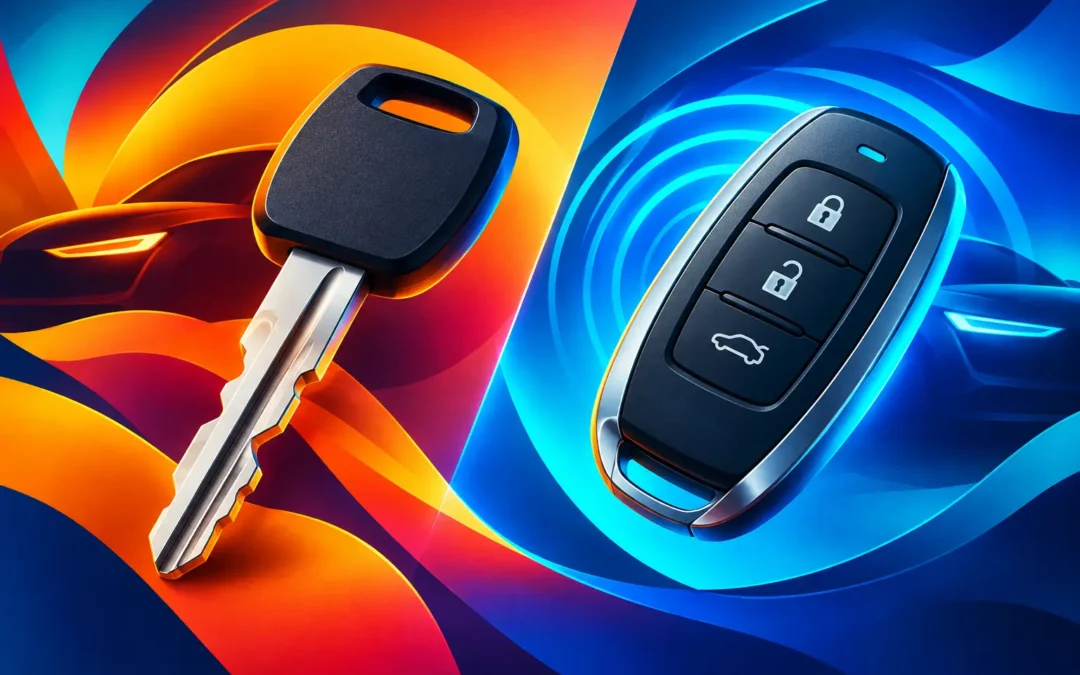
A car key can look simple right up until it will not start your vehicle. When comparing laser cut vs transponder keys, the biggest source of confusion is that these are not always two separate choices. A laser-cut key describes the way the metal blade is cut. A transponder key describes the electronic chip inside it. Many late-model vehicles use both.
If you lost your only key, your ignition turns but the engine will not start, or a replacement key works in the door but not the vehicle, knowing the difference helps you get the right solution without wasting time or money.
Laser Cut vs Transponder Keys: The Core Difference
A laser-cut key, also called a sidewinder key or high-security key, has grooves cut into the center or both sides of a thicker metal blade. The cuts are more complex than the teeth along the edge of a traditional house key or older car key. Despite the common name, these keys are generally cut with specialized milling equipment, not a literal laser.
A transponder key contains a small chip that communicates with your vehicle’s immobilizer system. When you turn the key in the ignition, the vehicle reads the chip’s unique signal. If the signal matches what the vehicle recognizes, it allows the engine to start. If it does not, the engine may crank without starting, or the security light may stay on.
That means the distinction comes down to two jobs. The blade has to physically operate the door and ignition. The chip has to electronically authorize the vehicle to run.
A key can be one, the other, or both. An older transponder key may have a standard edge-cut blade and a chip. A modern laser-cut key may have no chip in some applications, though that is less common with newer vehicles. Many vehicles from brands such as Honda, Toyota, Ford, Chrysler, Nissan, BMW, Mercedes-Benz, and Lexus use keys that are both laser-cut and transponder-equipped.
What a Laser-Cut Key Does
Laser-cut keys are designed to make the mechanical lock harder to manipulate and harder to duplicate with basic key-cutting equipment. Their wider, thicker blades and complex groove patterns require the correct blank and specialized machinery.
For a driver, the practical benefit is a higher-security mechanical key. The trade-off is that cutting a replacement typically costs more than duplicating a conventional metal key. Not every hardware store or general key kiosk can make one correctly.
You may have a laser-cut key if the blade looks flat on the outer edges, with a winding groove running down the center. These keys are often symmetrical, meaning they can be inserted into the ignition either way. Conventional keys usually have visible teeth cut along one edge.
A damaged laser-cut blade can cause real trouble even when the electronic chip is fine. If the blade is bent, heavily worn, or cut inaccurately, it may not turn the ignition or unlock the door. Forcing it can damage the lock cylinder, which turns a key replacement into a larger repair.
When You Need a New Laser-Cut Key
You may need a replacement when the key is lost, snapped, bent, worn down, or intermittently sticking in the ignition. A spare is also a smart move when you still have one working key. Creating a duplicate before the last key disappears is usually simpler than building a key from scratch after a total loss.
The correct process is more than tracing an old key onto a blank. A qualified automotive locksmith identifies the vehicle, selects the proper key blank, cuts it to the right key code or pattern, and tests that it operates the locks and ignition smoothly.
What a Transponder Key Does
The chip inside a transponder key is a theft-deterrent feature. It does not need a battery to work in most standard transponder keys. The vehicle’s ignition antenna energizes the chip and reads its coded response when the key is inserted and turned.
If the key blade is copied perfectly but the chip is missing, unprogrammed, or incorrect, the vehicle may unlock and the ignition may turn, but the engine will not start. This is why a cheap metal copy can be frustratingly useless for many vehicles.
Programming is the critical step. The replacement chip must be matched to the vehicle’s immobilizer system using the proper diagnostic tools and procedure. Depending on the make, model, and year, programming may require an existing working key, security access, or an on-site automotive locksmith with the right equipment.
Signs of a Transponder Problem
A key that suddenly stops starting the car is not automatically a transponder failure. The issue could also be a weak vehicle battery, ignition problem, damaged key blade, faulty key fob, or an immobilizer system concern. Still, a few signs point toward the chip or programming:
- The engine cranks but does not start after the key turns normally.
- A security or key-shaped warning light flashes or remains illuminated.
- A newly copied key opens the doors but will not start the vehicle.
- One key starts the vehicle while another seemingly identical key does not.
A locksmith can test the situation and determine whether you need a new key, chip programming, battery service for a remote, or a closer look at the vehicle’s ignition and security system.
Why Many Modern Keys Are Both
For most drivers, laser cut vs transponder keys is not an either-or question. The key may need a precision-cut blade and electronic programming at the same time. A remote-head key, flip key, or smart key can add another layer of features, such as lock and unlock buttons, a panic alarm, trunk release, or push-button start capability.
Those features should not be confused with the transponder itself. A remote battery can die while the transponder still allows the vehicle to start when the key is in the ignition. Conversely, the remote buttons may work while the transponder chip is not programmed correctly. Push-button start systems use proximity fobs rather than a traditional ignition key, but they still rely on electronic authorization.
The vehicle identification number, make, model, year, and available keys all affect what a replacement requires. That is why a clear photo of the key and the vehicle details can help a mobile locksmith arrive prepared with the correct blank, equipment, and programming capability.
Replacement Cost and Timing: What Changes the Job
There is no one price for a laser-cut or transponder key because the labor and equipment vary. A basic edge-cut spare for an older vehicle is generally the least involved option. A laser-cut key with a transponder chip costs more because it requires a specific blank, precision cutting, and programming. A smart proximity fob or all-keys-lost situation may require more advanced programming and security access.
The fastest and most affordable time to make a spare is while you have a working key. With no working keys available, the locksmith may need to originate a key, access key-code information, program the immobilizer, and verify that the vehicle starts. That is still a service a properly equipped mobile automotive locksmith can often handle on location, saving you from arranging a tow to a dealership.
Avoid buying a random key online based only on how similar it looks. Keys that share a shape may use different chips, frequencies, blade profiles, or programming methods. An incorrect blank can add delay rather than save money.
What to Do When Your Key Is Lost or Not Working
First, do not keep forcing a sticking key in the ignition or door lock. If it breaks, part of the blade can remain lodged in the cylinder. If the key is missing, have your driver license, vehicle registration, and vehicle identification number ready to establish ownership.
Then contact a local automotive locksmith who can cut and program the appropriate key type. Resc-U Locksmith Services provides mobile assistance throughout the Coachella Valley for drivers dealing with lost keys, broken keys, lockouts, transponder programming, and laser-cut key replacement. The goal is simple: get you back into your vehicle and safely back on the road without unnecessary delay.
Before the next key emergency, consider having a tested spare made and keeping it somewhere secure away from the vehicle. One working spare can turn a stressful roadside problem into a quick, routine fix.