
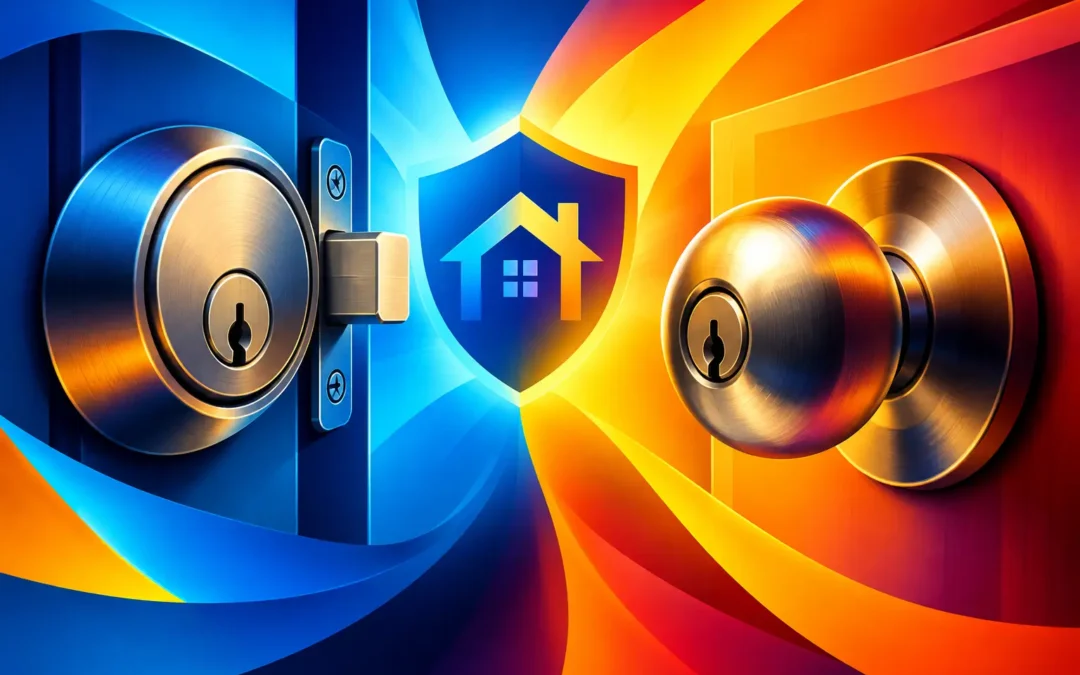
A locked door knob can make a front door look secure, but it is rarely the lock you want to rely on by itself. In the deadbolt vs door knob decision, the right answer usually is not choosing one over the other. For most homes, rentals, and small businesses, a locking knob or lever handles daily entry while a properly installed deadbolt provides the real security.
That distinction matters after a move, a break-in, a lost-key situation, or when you are upgrading an older door. The lock is only as effective as the hardware, door frame, strike plate, and installation behind it. Here is how to choose the setup that fits your property and your daily routine.
Deadbolt vs Door Knob: The Core Difference
A door knob lock is built into the knob itself. It is convenient because turning the key or interior thumb turn releases the latch and opens the door in one motion. Knob locks are common on interior doors and exterior entry doors, but their latch mechanism is spring-loaded. That makes it practical for everyday access, not the strongest option against force.
A deadbolt uses a solid metal bolt that extends into the door frame. Unlike a spring latch, the bolt does not retract when pressure is applied to the door. It must be turned by a key, thumb turn, keypad, or smart-lock motor. This is why deadbolts are the primary security lock on most exterior residential doors.
The simplest way to think about it is this: a knob manages access; a deadbolt helps resist forced entry. On a properly secured exterior door, they work together.
Why a Deadbolt Is Usually the Better Security Choice
Deadbolts offer stronger resistance because the bolt reaches deeper into the strike plate and frame. When paired with long screws driven into the wall framing, that connection can make a major difference when a door is kicked, shoved, or pulled.
A basic locking knob can be defeated more easily because its latch has moving parts designed to retract. It may also be more vulnerable if the knob hardware is damaged or removed. That does not mean door knobs have no place on exterior doors. It means they should not be the only barrier protecting a house, office, or rental unit.
For exterior entry doors, look for a quality deadbolt with a solid bolt, a reinforced strike plate, and hardware that fits the door correctly. The lock grade matters, but installation matters just as much. A high-quality deadbolt installed in a weak frame or loose strike plate will not perform the way it should.
Single-cylinder and double-cylinder deadbolts
A single-cylinder deadbolt has a key on the exterior and a thumb turn on the interior. It is the common choice for most homes because people can leave quickly without searching for a key.
A double-cylinder deadbolt requires a key on both sides. Some property owners consider it for doors with glass close to the lock, since someone who breaks the glass cannot simply reach in and turn the thumb turn. However, it can slow escape during a fire or emergency. Local building codes and fire-safety rules may also limit where it can be used. If you are considering one, get professional guidance before installing it.
When a Door Knob or Lever Is Still Necessary
Even with a deadbolt, you still need a functional latch to keep the door closed when the deadbolt is unlocked. That is the job of the knob or lever. It also gives you a fast, familiar way to enter and exit during the day.
For many Coachella Valley homes, a keyed entry knob or lever below a deadbolt is the standard setup. The lower lock can be used when you are home and moving in and out often, while the deadbolt is engaged when the property is unattended or everyone has gone to sleep.
Levers can be especially useful for seniors, people with limited hand strength, and commercial spaces where accessibility matters. A lever does not automatically provide more security than a knob, but it can make daily operation easier. On a business entry door, the right commercial lever and deadbolt combination depends on the door type, occupancy requirements, and access needs.
Choosing the Right Lock for Each Door
Not every door needs the same hardware. An interior bedroom or bathroom door generally needs privacy, not a heavy-duty deadbolt. A front door, garage entry door, rear door, and door connecting a garage to the home deserve stronger protection.
For a rental property, consistent hardware is often the practical choice. Matching keyways or properly managed keypad codes can make turnovers easier, but every new tenant should receive fresh access. Rekeying is often enough when the existing locks are in good condition. If the locks are worn, loose, outdated, or mismatched, replacement may be the smarter long-term move.
Sliding doors, French doors, and doors with narrow frames need special attention. A standard deadbolt may not fit or may not solve the real weak point. These doors may need specialized locks, reinforced hardware, or additional security measures. Forcing the wrong lock onto the wrong door can leave you with a poor fit and a false sense of security.
Consider Convenience Before You Buy
Traditional keyed deadbolts are dependable and straightforward. They have no batteries, apps, or programming requirements. For many homeowners, that simplicity is exactly the point.
Keypad and smart deadbolts add convenience when several people need access. You can assign codes to family members, employees, cleaners, or short-term guests instead of handing out copies of a key. Some systems allow temporary codes, activity alerts, and remote management. They can be helpful for vacation homes and rental properties, but they require battery checks and occasional troubleshooting.
A smart lock does not automatically make a door more secure. The physical deadbolt, strike plate, door frame, and installation still determine how well the entry resists force. Choose a reputable lock and make sure it is correctly fitted to the door. If the lock sticks, the bolt does not extend fully, or the door is out of alignment, fix that issue before relying on electronic features.
Installation Problems That Reduce Security
Many lock problems are not caused by the lock itself. They come from a door that is sagging, a misaligned strike plate, short screws, or wood that has split around the frame. A deadbolt should turn smoothly without needing to lift, pull, or push the door.
Watch for warning signs such as a bolt that catches before locking, a knob that wiggles, a strike plate that is loose, or a deadbolt that barely reaches the frame. These issues can lead to lockouts, broken keys, and security gaps. They are also easier and less expensive to address before the lock fails completely.
For exterior doors, avoid treating hardware installation as a quick cosmetic project. The hole placement, backset, door thickness, bolt alignment, and frame reinforcement all affect performance. If you have just moved in, lost keys, experienced an attempted break-in, or are managing a tenant change, a professional inspection can help identify weak points that are easy to miss.
Should You Rekey or Replace Your Locks?
Rekeying changes the internal pins so old keys no longer work. It is a cost-effective choice when the lock hardware is still secure, operates smoothly, and meets your needs. It is often the first call after buying a home or changing tenants.
Replacement makes more sense when the lock is damaged, low quality, repeatedly sticking, incompatible with your desired key system, or no longer right for the door. It is also the time to upgrade if you have only a locking knob on an exterior door and want the added protection of a deadbolt.
Resc-U Locksmith Services can assess the condition of your current locks and help you choose a practical solution, whether that means rekeying, replacing hardware, installing a keypad deadbolt, or securing a problem door after hours.
The Best Setup for Most Exterior Doors
For most residential exterior doors, the best answer is a quality single-cylinder deadbolt paired with a keyed knob or lever. The knob or lever keeps the door latched and convenient for everyday use. The deadbolt is engaged when security matters most.
There are exceptions. A commercial storefront may require different hardware. A rental property may benefit from a keypad deadbolt. A door with glass near the lock needs a careful fire-safety discussion. The goal is not to add the most hardware possible. It is to install the right lock, on the right door, with a solid frame connection.
If your current exterior door has only a locking knob, starts sticking when you turn the key, or has been compromised after a move or lost key, do not wait for a lockout to deal with it. A quick professional evaluation can turn an uncertain entry door into one you can confidently lock behind you tonight.